Keynote Speakers
l Yiyu Yao
|
|
Xiping Hu Beijing Institute of Technology, China PhD & Professor, Fellow of the Singapore Academy of Engineering |
|
|
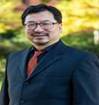
Shiwen Mao Auburn University, Auburn, AL, USA PhD & Professor |
|
|
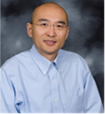
Abdulmotaleb El Saddik University of Ottawa, Canada FRSC, FIEEE, FEIC, FCAE Distinguished Professor |
|
|
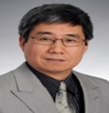
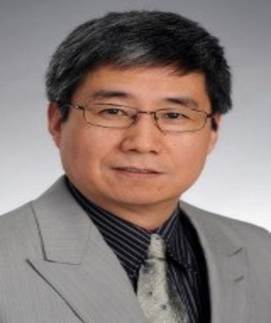
Yiyu Yao University of Regina, Canada PhD & Professor, IRSS Fellow |
|
|
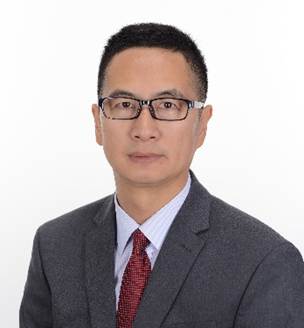
F. Richard Yu Carleton University, Canada PhD & Professor, Fellow of the FRSC, CAE, EIC, IEEE, and IET |
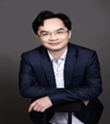
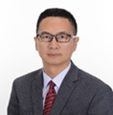

AI-driven Complex Behaviors of Human Groups in Intelligent Agents
Xiping Hu, PhD & Professor
Fellow of the Singapore Academy of Engineering
Beijing Institute of Technology, China
Email: hxppp@163.com
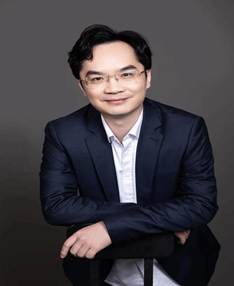
Abstract: Intelligent agents, capable of perceiving their environments, making decisions, and acting, are profoundly shaping the future of key domains, including intelligent transportation, public safety, and automated manufacturing. However, within the predominantly data-driven, passive decision-making AI paradigm, current agents continue to face significant challenges, such as insufficient cognitive capabilities, limited active perception, and weak coordination. Therefore, this presentation focuses on “human-like cognitive mechanisms and complex group behaviors”, examining methods and mechanisms for endowing agents with human-like cognitive evolution and group interaction abilities in complex scenarios, thereby more effectively empowering a wide range of industries.
Bio-Sketch: Prof. Xiping Hu received his PhD from the University of British Columbia, Canada. He is a Fellow of the Singapore Academy of Engineering. He is currently a full professor and doctoral supervisor at the Beijing Institute of Technology, Executive Dean of the Artificial Intelligence Research Institute at Shenzhen MSU-BIT University, and Director of the Guangdong-Hong Kong-Macao Joint Laboratory for Emotional Intelligence and Pervasive Computing. His research covers swarm intelligence, cyber-physical systems, and affective computing, with recent work on multimodal user modeling and EEG- and behavior-based affective recommendation. He has published over 280 papers in venues including Nature sub-journals, Proceedings of the IEEE (cover article), IEEE TPAMI (cover article), AAAI (Oral), and ICML, and has been listed among Stanford University’s World’s Top 2% Scientists every year since 2019. As principal investigator, he has led research grants from agencies including NSFC, NSERC (Canada), the European Union, IBM, and TELUS. He has served as General Co-Chair of the 8th IEEE SmartIoT and the 16th IEEE CloudCom, and as an invited speaker at the University of Cambridge, IBM Watson Research, and the National University of Defense Technology.
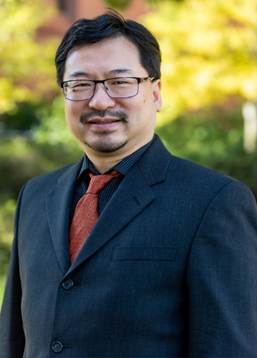
Cloud Computing Meets Functional Data Analysis for Wireless and Network Intelligence
Shiwen Mao, PhD & Professor
Auburn University, Auburn, AL, USA
Email: smao@auburn.edu
 Abstract: Cloud
computing underpins modern data infrastructure and continuously generates high
frequency telemetry from IoT sensors, serverless functions, and virtualized
resource logs. Similar time varying data streams arise across intelligent
transportation systems, wireless sensing platforms, and connected device
ecosystems. Such observations are inherently functional in nature, better
modeled as smooth trajectories evolving over continuous domains rather than as
isolated tabular records. Yet most analytics pipelines remain rooted in
discrete machine learning models that overlook temporal continuity, cross
trajectory dependence, and latent functional structure. Functional Data
Analysis (FDA) provides a principled statistical framework for modeling data at
the function level through smoothing, basis representations, and covariance
driven dimensionality reduction. Despite its strong theoretical foundations,
FDA remains underutilized in large scale computing and sensing systems due to
gaps between statistical methodology and engineering deployment. This talk
highlights FDA as a unifying modeling paradigm for time varying data,
presenting recent work in traffic flow modeling, RF sensing, RFID signal
analysis, and device fingerprinting. Across these domains, functional
representations demonstrate improved robustness to noise and missing data,
enhanced interpretability of temporal dynamics, and stronger cross domain
generalization, positioning FDA as a scalable foundation for modern cyber
physical analytics.
Abstract: Cloud
computing underpins modern data infrastructure and continuously generates high
frequency telemetry from IoT sensors, serverless functions, and virtualized
resource logs. Similar time varying data streams arise across intelligent
transportation systems, wireless sensing platforms, and connected device
ecosystems. Such observations are inherently functional in nature, better
modeled as smooth trajectories evolving over continuous domains rather than as
isolated tabular records. Yet most analytics pipelines remain rooted in
discrete machine learning models that overlook temporal continuity, cross
trajectory dependence, and latent functional structure. Functional Data
Analysis (FDA) provides a principled statistical framework for modeling data at
the function level through smoothing, basis representations, and covariance
driven dimensionality reduction. Despite its strong theoretical foundations,
FDA remains underutilized in large scale computing and sensing systems due to
gaps between statistical methodology and engineering deployment. This talk
highlights FDA as a unifying modeling paradigm for time varying data,
presenting recent work in traffic flow modeling, RF sensing, RFID signal
analysis, and device fingerprinting. Across these domains, functional
representations demonstrate improved robustness to noise and missing data,
enhanced interpretability of temporal dynamics, and stronger cross domain
generalization, positioning FDA as a scalable foundation for modern cyber
physical analytics.
Bio-Sketch: Shiwen Mao is a Professor and Earle C. Williams Eminent Scholar and Director of the Wireless Engineering Research and Education Center at Auburn University, Auburn, AL, USA. Dr. Mao's research interest includes wireless networks, RF sensing and IoT, smart health, and machine learning. He is the editor-in-chief of IEEE Transactions on Cognitive Communications and Networking, an Associate Editor-in-Chief of IEEE Internet of Things Journal, a member-at-large on the Board of Governors of IEEE Communications Society, and Vice President of Technical Activities of IEEE Council on Radio Frequency Identification (CRFID). He was the General Chair of IEEE INFOCOM 2022, a TPC Chair of IEEE INFOCOM 2018, and a TPC Vice-Chair of IEEE GLOBECOM 2022. He is a co-recipient of several technical and service awards from the IEEE, and a Fellow of the IEEE in the Class of 2019.
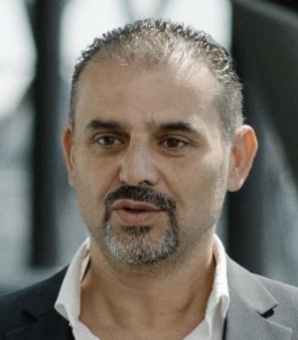
From Mirror to Companion: AI and the Next Era of Digital Twins
Abdulmotaleb El Saddik, FRSC, FIEEE, FEIC, FCAE Distinguished Professor
The University of Ottawa, Canada | X: https://twitter.com/aelsaddik
Instagram: https://www.instagram.com/le.prof/
 Abstract: Over the past
decades, digital twins have evolved from ideas on paper into living companions
that reflect and interact with the physical world. By staying in sync with
their real counterparts, they help us monitor, understand, and improve systems
in ways we could not imagine before. Today, with the power of AI, immersive
technologies (AR, VR, XR), and 5G, digital twins are moving from simple replicas
into intelligent partners. With multimodal large language models (MLLMs),
they can see, hear, and interpret data more like humans, opening the door to
real-time, adaptive, and personalized interaction. The influence reaches far
beyond industry. In healthcare, education, and smart cities, AIaugmented
digital twins can enhance well-being, extend human abilities, and create new
opportunities for societies around the world. In this keynote, I will share
how AI is changing digital twins from tools into transformative forces that
shape our future. It is, in the end, a journey not only about technology, but
about humanity building systems that enrich life.
Abstract: Over the past
decades, digital twins have evolved from ideas on paper into living companions
that reflect and interact with the physical world. By staying in sync with
their real counterparts, they help us monitor, understand, and improve systems
in ways we could not imagine before. Today, with the power of AI, immersive
technologies (AR, VR, XR), and 5G, digital twins are moving from simple replicas
into intelligent partners. With multimodal large language models (MLLMs),
they can see, hear, and interpret data more like humans, opening the door to
real-time, adaptive, and personalized interaction. The influence reaches far
beyond industry. In healthcare, education, and smart cities, AIaugmented
digital twins can enhance well-being, extend human abilities, and create new
opportunities for societies around the world. In this keynote, I will share
how AI is changing digital twins from tools into transformative forces that
shape our future. It is, in the end, a journey not only about technology, but
about humanity building systems that enrich life.
Bio-Sketch: Abdulmotaleb El Saddik is a Distinguished University Professor at the University of Ottawa, and a globally recognized scholar in intelligent multimedia, digital twins, and immersive technologies. He serves as Editor-in-Chief of the ACM Transactions on Multimedia Computing, Communications and Applications (ACM TOMM) and has shaped the field as Associate Editor and Guest Editor for several leading journals. With more than 600 publications, 10 books, and supervision of over 150 researchers, his work has inspired new generations of scholars and innovators. He has chaired numerous international conferences and secured more than $30M in research funding to advance the frontiers of AI, haptics, and digital twins. Professor El Saddik is a Fellow of the Royal Society of Canada, IEEE, the Canadian Academy of Engineering, and the Engineering Institute of Canada. His awards include the Friedrich Wilhelm Bessel Award, IEEE Canada C.C. Gotlieb Medal, the A.G.L. McNaughton Gold Medal, and the IEEE I&M Technical Achievement Award.
The Art, Science, and Applications of Three-way Decision
Yiyu Yao, PhD & Professor
IRSS Fellow University of Regina, Canada
Email: Yiyu.Yao@uregina.ca
 Abstract: A theory of
three-way decision concerns thinking in threes, problem solving in threes, and
computing in threes. In this talk, I will cover the art, science, and
applications of three-way decision in three parts: (1) the foundations of
three-way decision, (2) the Dao of three-way decision, and (3) applications of
three-way in intelligent computing.
Abstract: A theory of
three-way decision concerns thinking in threes, problem solving in threes, and
computing in threes. In this talk, I will cover the art, science, and
applications of three-way decision in three parts: (1) the foundations of
three-way decision, (2) the Dao of three-way decision, and (3) applications of
three-way in intelligent computing.
Bio-Sketch: Yiyu Yao is a professor of computer science with the Department of Computer Science, University of Regina, Canada. His research interests include three-way decision, granular computing, Web intelligence, rough sets, fuzzy sets, interval sets, formal concept analysis, information retrieval, machine learning, and data mining. He proposed a theory of three-way decision, a decision-theoretic rough set model, and a triarchic theory of granular computing. He has published over 400 papers. He was selected as a highly cited researcher by Clarivate from 2015 to 2019. He is the President of Web Intelligence Academy. He serves as a fellow of International Rough Set Society (IRSS). Personal homepage: http://www2.cs.uregina.ca/~yyao/.
Intelligence Networking for Agentic and Physical AI Systems
F. Richard Yu, PhD & Professor
Fellow of the CAE, IEEE, and IET
Carleton University, Canada
Email: richard_yu@carleton.ca
 Abstract:
As AI systems become increasingly agentic — capable of autonomous
planning and action — and increasingly physical, embodied in connected and
autonomous vehicles, robots, and industrial agents, networks must coordinate
intelligence itself, not just data. Intelligence Networking treats intelligence
as a first-class networked resource, enabling predictive analytics, autonomous
decision-making, and adaptive physical systems that respond dynamically to
changing conditions. This talk examines the architecture and protocols needed
to realize this paradigm with different applications. The paradigm is grounded
theoretically in Intropy, a novel framework for modeling intelligence from the
presenter's recent book, which formalizes intelligence gain as information flow
moderated by resistance.
Abstract:
As AI systems become increasingly agentic — capable of autonomous
planning and action — and increasingly physical, embodied in connected and
autonomous vehicles, robots, and industrial agents, networks must coordinate
intelligence itself, not just data. Intelligence Networking treats intelligence
as a first-class networked resource, enabling predictive analytics, autonomous
decision-making, and adaptive physical systems that respond dynamically to
changing conditions. This talk examines the architecture and protocols needed
to realize this paradigm with different applications. The paradigm is grounded
theoretically in Intropy, a novel framework for modeling intelligence from the
presenter's recent book, which formalizes intelligence gain as information flow
moderated by resistance.
Bio-Sketch: F. Richard Yu obtained his PhD in Electrical Engineering from the University of British Columbia (UBC). His research interests include intelligent and autonomous systems, physical AI, IoT, and security/privacy. He has been consistently recognized as a Clarivate “Highly Cited Researcher,” Stanford “Top 2% Most Cited Scientist,” and ScholarGPS “Top 0.05% Highly Ranked Scholar” for several consecutive years. He has received several Best Paper Awards from first-tier conferences, two Carleton Research Achievement Awards (2012 and 2021), and the Ontario Early Researcher Award in 2011. He is a Member of the Academia Europaea (MAE) and a Fellow of the Royal Society of Canada (FRSC), Canadian Academy of Engineering (CAE), the Engineering Institute of Canada (EIC), IEEE, and IET. He also serves as a Board Member of the IEEE Vehicular Technology Society and as an IEEE Distinguished Speaker.